Poster presentations

Measuring conscious contents using EEG complexity (Registered Report)

Publication status: (in-principle acceptance) at Peer Community in Registered Reports
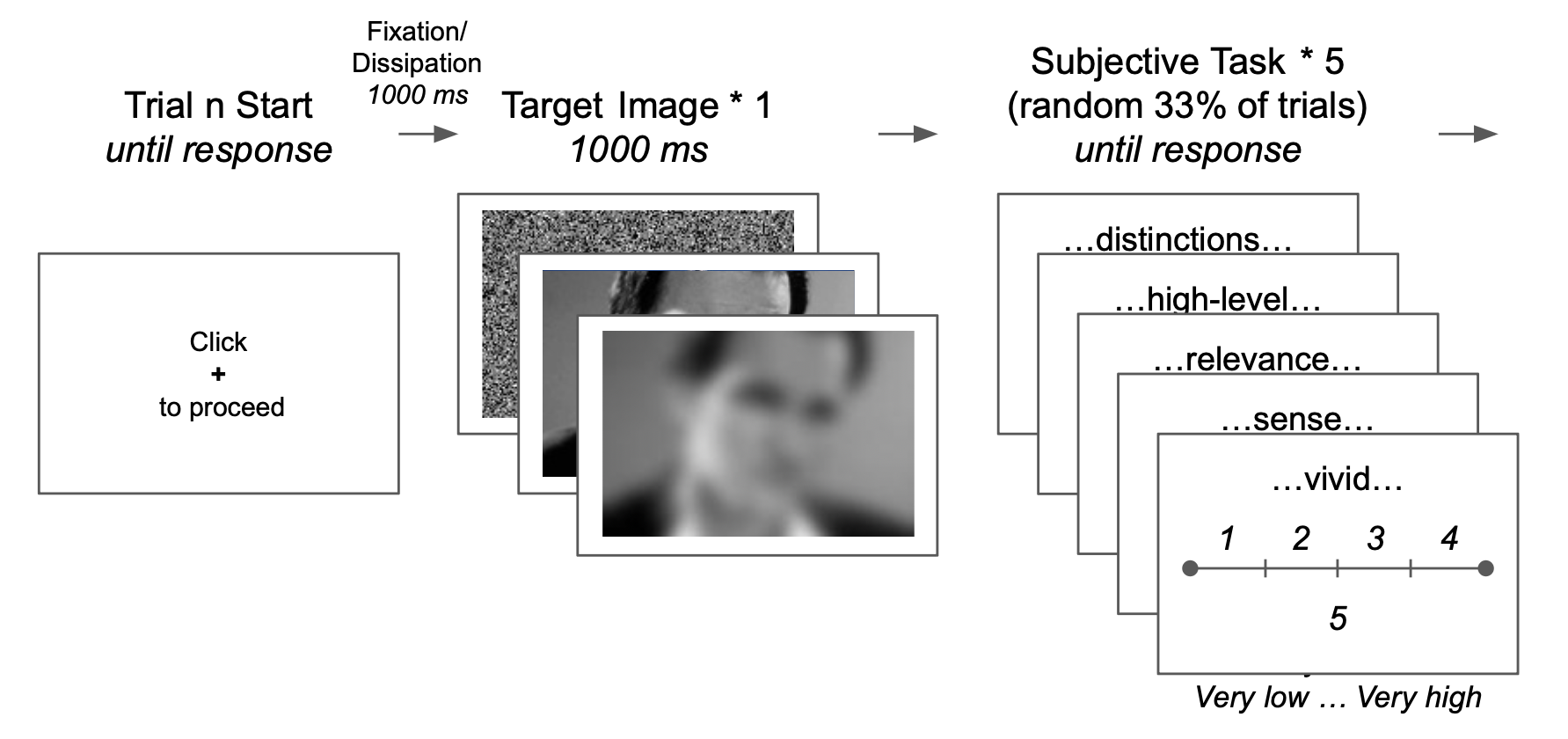
In this study, we measure participants’ neurophysiological (EEG), subjective, and behavioral responses in states of normal wakefulness to visual and auditory stimuli that vary in granularity of subjective characteristics, such as meaningfulness. This study advances our understanding of consciousness by clarifying the relationship between stimulus complexity and measures of brain complexity and phenomenology.

Funding:

Talks:

  • The Association for Mathematical Consciousness Science (AMCS) Models of Consciousness 2026, Copenhagen, Denmark (October 12th - 16th, 2026)

Posters:

  • Association for the Scientific Study of Consciousness ASSC 29 , Santiago, Chile (June 30th - July 3rd, 2026)
  • The Cognitive Science Society CogSci 2026, Rio de Janeiro, Brazil (July 22nd - July 25th)
Does phenomenology support the axiomatic framework of integrated information theory (IIT)

Publication status: (in preparation)

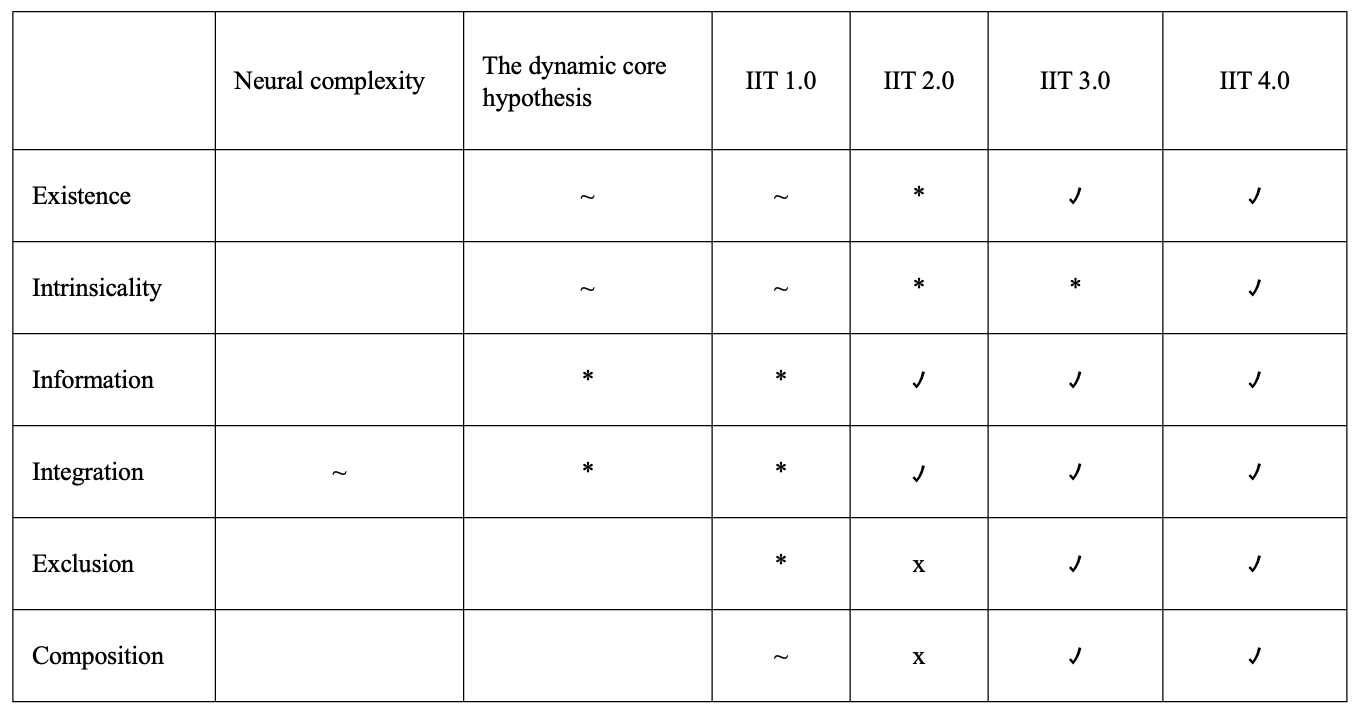
In this paper, we first review how IIT’s axiomatic framework has evolved through the latest version (4.0), and why the theory takes such an approach. We then analyze this approach through the lens of Husserlian phenomenology, finding support for both IIT’s axiomatic approach in general, and for all of IIT’s individual axioms.

Posters: Association for the Scientific Study of Consciousness ASSC 28, Heraklion, Crete (July 6th – 9th, 2025)

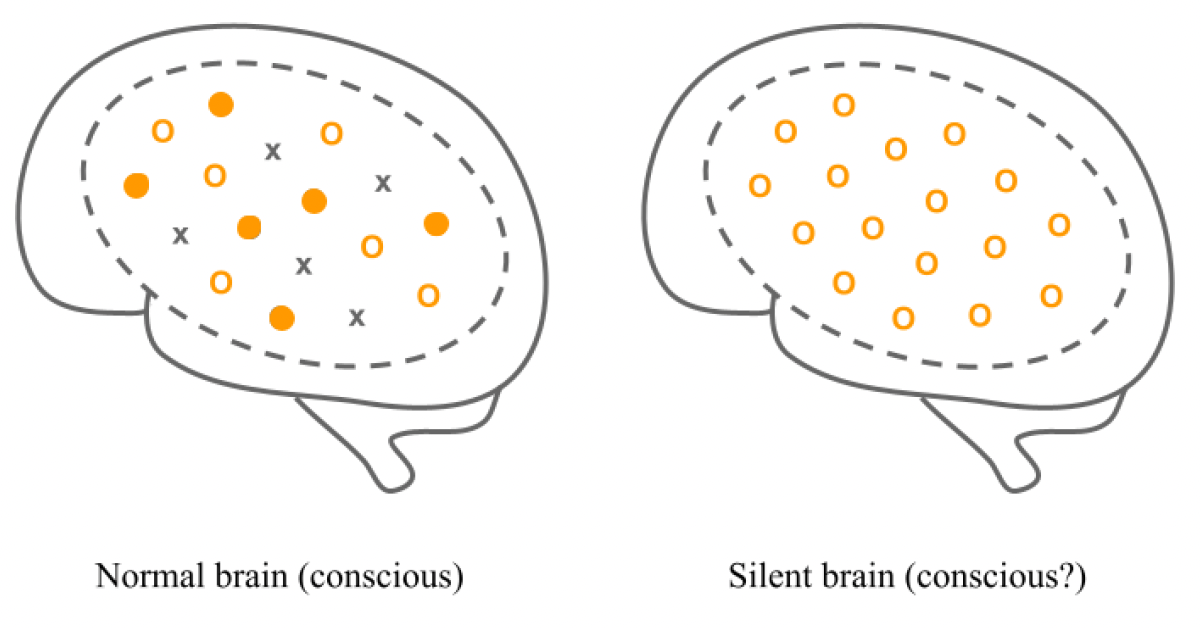
Integrated information theory (IIT) and the testability of the silent neuron predictions

Publication status: [published] at Neuroscience of Consciousness

In this paper, we provide a detailed analysis of IIT’s two silent neuron predictions, showing how they can in fact be tested, contra Bartlett (2022). In the final section of the paper, we also distinguish between two ways of explaining one of the predictions. By drawing on the work of Imre Lakatos, we conclude with a discussion of how the distinction between the two explanations sheds light on why it is so difficult to resolve theoretical disputes about consciousness. Despite these difficulties, we provide a framework that can lead to concrete progress.

Talks: Monash University School of Psychological Sciences (MoNoC/Tsuchiya Lab), Zoom (May 16th, 2023) (*invited)

Posters: Association for the Scientific Study of Consciousness ASSC 27, Tokyo, Japan (July 2nd - 5th, 2024)

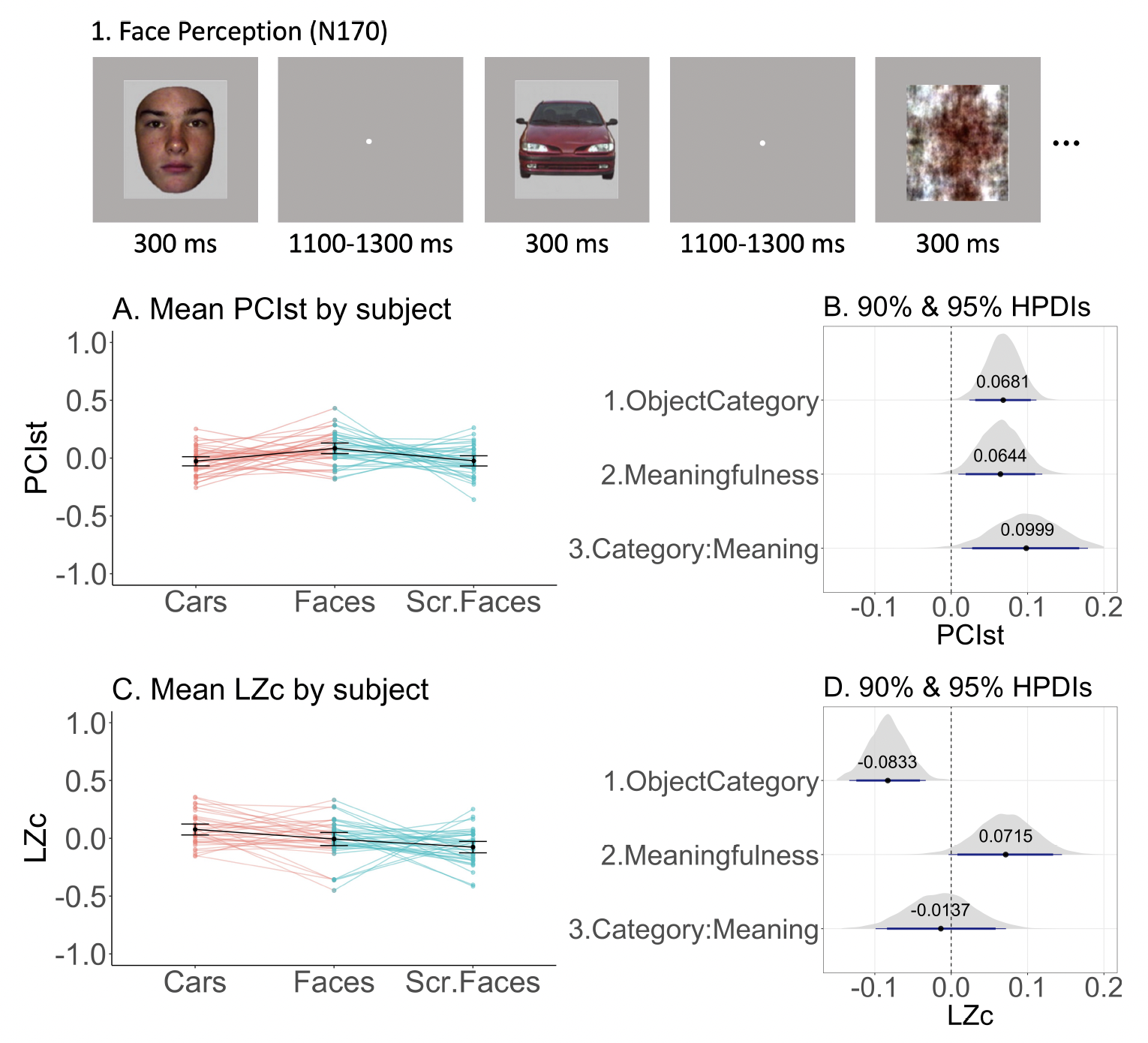
Detecting differences in conscious contents using EEG complexity measures (proof of concept)

In this proof-of-concept study, we analyzed three existing EEG datasets where 40 participants performed an active face perception task, an active visual oddball task, and a passive auditory oddball task. We computed the perturbational complexity index (PCIst) and Lempel-ziv complexity (LZc) for every trial and analyzed the results using Bayesian mixed-effects models. We found that i) PCIst was higher for meaningful visual stimuli but that LZc could be higher or lower; i) PCIst was higher for rare visual stimuli but LZc was lower; and ili) PCIst was higher for rare auditory stimuli but LZc did not discriminate rare vs. frequent auditory stimuli.

Talks:

  • University of California, Los Angeles, Department of Psychology (MontiLab), Zoom (December 11th, 2023) (*invited)
  • University of California, Merced, Department of Cognitive and Information Sciences Annual Project Mini-Conference, Merced, CA (May 8th, 2023)

Posters:

  • Association for the Scientific Study of Consciousness ASSC 26, New York, NY (June 23rd – 25th, 2023) (awarded 2nd place in the student poster competition)
  • Aalto University School of Science, Department of Neuroscience & Biomedical Engineering 9th Science Factory: TMS–EEG Summer School and Workshop, Espoo, Finland (May 27th – June 2nd, 2023)